Total Pageviews

Saturday, 25 July 2020

Slowly to Sprotbrough.

As Helen wanted to go shopping again, without me, she went off for another wander around Doncaster. This left me to wash the port side of the boat and then I had a start at polishing it afterwards. It was then that the sun came out and it was just too hot on the side to continue.

It was a real shame that I couldn't continue and do the whole boat, honestly, but t you can see the difference already.

A boat came ahead of us to moor, which they did but not before belting our bow. Helen returned and we had a bit of lunch. After using a lot of water washing the boat etc we needed water so we had to come off and swing and slip in between the tap and the work boats. We were soon full, rubbish ditched etc and ready to turn with the bow on the berth and off up to the lock. As Helen went ashore we saw the newly moored boat had cast off and was following us to the lock. The bridge is just about under Doncaster Station. We were soon in and up and on our way.

Not far from the lock is Power Station Bight (above). There was a power station In the centre of Doncaster  from 1900. In fact it was around where the visitor moorings and little marina are now. That explains why there is a wide there. This place closed in 1958, but meanwhile a new power station was built the other side of the lock in 1953. The sites were obviously chosen as they could take coal from the mines direct by canal. The first station produced a maximum of 14 GWH a year the second was a maximum of 480 GWH a year. It lasted until 1983. Power Station Bight is where the boats were unloaded. When the power station was demolished the new Doncaster Prison was built on the site, and is still there.

Once clear of Doncaster we were then in the River Don proper. To be honest, other than the current there was little difference in the look. The hamlet of Newton is on the west bank and there was a little pedestrian ferry here until at least 1947.

Interestingly on the Docaster Rowing Clubs website they say they have 'almost exclusive access to the 5km of the River Don.' I'm not sure what C&RT think of that. They were formed in a pub in 1989 and the boat house is in Hexthorpe Flatts Park that combined with the scenic river make it a pretty special place I think.

Next come two railway bridges. The nearesr is an under deck truss bridge that was built in 1910 for the Great Central Railway and is still a freight only line that misses out crossing the East Coast Mainline at Doncaster Station. Beyond is the over deck truss bridge that was started in 1911 but was delayed due to WWI and was opened to mineral traffic in 1916. It was conceived by the Hull and Barnsley  Railway but built together with the Great Central Railway. It started to lose traffic in 1958 and by 1969 no traffic was crossing. It later carried a conveyor belt but in 2001 became part of the Trans Pennine route.

Once under the less inspiring A1(M) bridge we were soon at Sprotborough Lock. Once the gates opened it seemed to go on to infinity and beyond

The Wyre Lady was been a pleasure boat on the River Don for decades. Last time we came this way it was undergoing a refurbishment. As we approached it looked like it hadn't progressed very much. However we could see that it had been on fire in the wheelhouse. It seems it was only in June that it occurred.

Just over the river from the visitor moorings above the lock was the Boat Inn, a quite posh Vintage Inn place. Helen had already picked the wine she was going to have, in a bucket was how she put it. Imagine our disappointment when we realised that it was closed as it had been severely flooded in the events early this year. We decided to walk up to the village to have a look and see if the Ivanhoe was open. It was newly refurbished and opened in March, only to be forced to be closed a couple of weeks later. However it was open and I had a pint of Sam Smith's Bitter. The Covid19 has affected things there as it was £3-00 a pint. I don't think I have paid £3 in a Sam Smith's pub, even in London! On the way back to the boat via the raod we passed the lovelly Rectory where Group Captain Douglas Bader CBE, DSO and DFC, lived as a boy around 1923. It said the 'legless pilot' but I think they meant lower limbless, rather than inebriated. Or maybe they didn't as he was a bit of a lad and had a film made about his life.

Friday, 24 July 2020

Down to Doncaster.

We slept well and woke to a better day wit the sun shining. We didn't rush as we weren't going far.

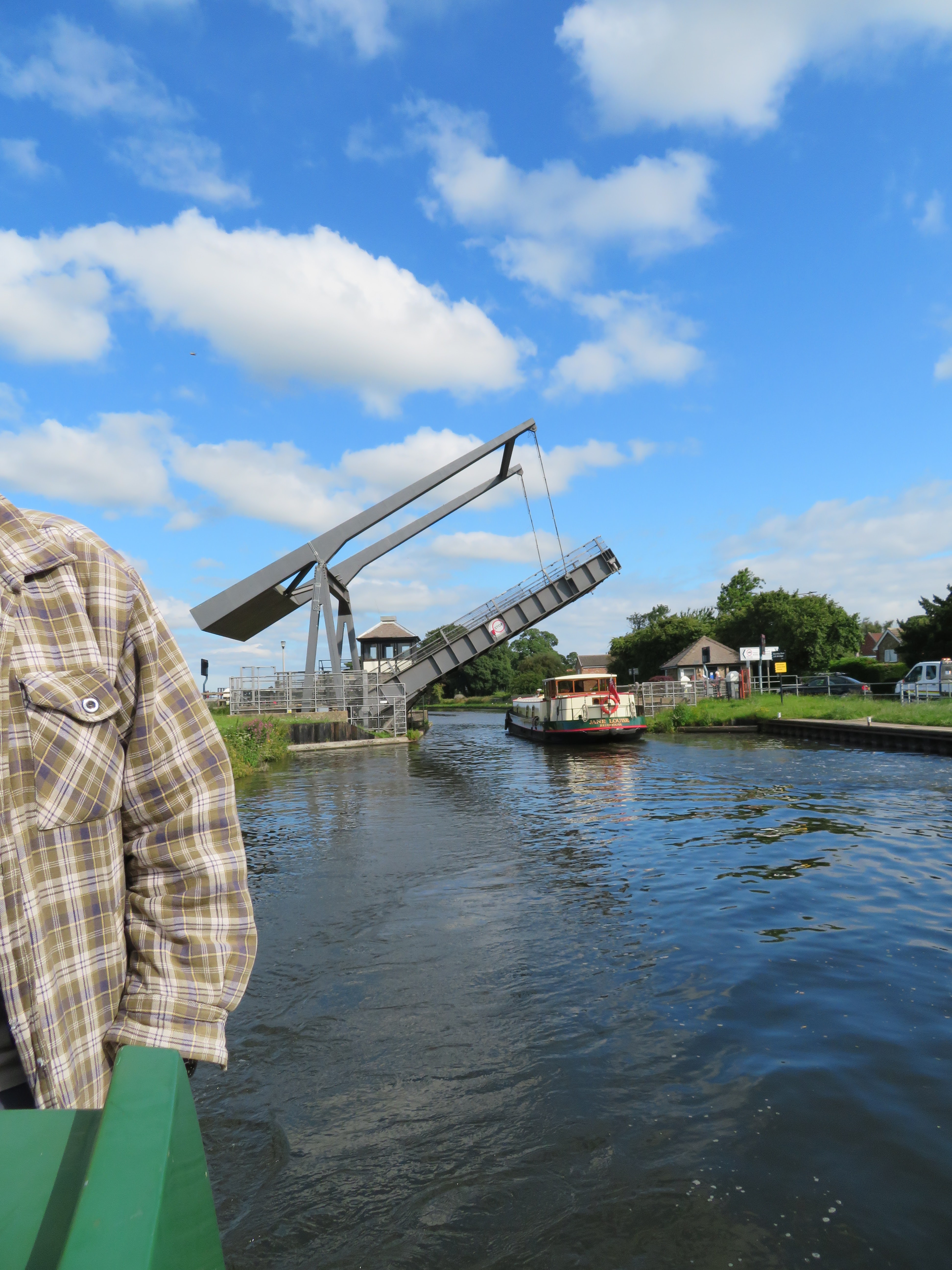
I was just getting ready to set off when Helen decided she had something else to do. The delay worked well as just then a lady appeared at the controls of the bridge and I could then see a couple of Dutch barges approaching from the other side. They very kindly left it up for me to come through between them. Better than holding up the traffic with a double lift as it is a busy road.

St Oswald's church has been out on a limb since 1922. In 1919 the Pilkington Glass company bought land nearby to build a new plant. They also built facilities for the workers and the village of Kirk Sandall gravitated away from the old centre. It seems now that it is becoming the centre of housing once again as there seems to be loads of new homes being built. Shame the church is closed, but is
kept by the Churches Conservation Trust and still has occasional services. It could well become the centre of the community once more.
The pipe bridge carries something, I hardly think it will be water, across the flood plain to the right and also the River Don that is just beyond the piling. This is the area where the normal tides run up to. I expect with a surge they will get all the way to the weir at Doncaster.

The canal reminds me of The River Aire beyond Castleford, quite un canal like here.

Long Sandall Lock was soon in view. To the right is the old narrow lock. I think this was one that was superseded by the  200' locks that were created in the 1980's. The amber light is on showing that the lock is in boat operation mode. Helen manages the controls with aplomb and we were soon through and on our way again.

This is Strawberry Island Boat club and we had seen several boats from here heading north today. Last year there was a large number of them on the Nene and Ouse.  In the distance can be seen Doncaster Minster, or the parish church of St. George's. It is right by the visitor moorings so we can see how far we have to go. The previous medieval church burned down in 1853 and was replaced in 1858 designed by George Gilbert Scott. He also designed the St. Pancras Hotel and the Albert Memorial, and not the bloke who designed the UK telephone box, Giles Gilbert Scott.

It was good to see that there was room on the visitor moorings for us

Thursday, 23 July 2020

Pastures New

We have finally dragged the boat from the the marina, over the hump of weed and mud that had built up around it. I am not a boat polisher but even I will have to institute a programme of washing and polishing. We got aboard the other night and checked out all the system etc. Everything was fine, at least to start the trip anyway! I took the car back home and caught the train back to Thorne. It was after 1700 when I got back so we stayed one more night.

As always the wind seemed to pick up just as we were ready to leave, or maybe it was just nerves after so long a way from the helm. I remembered to get the mooring lines out, and even put the tiller on, something I regularly forget it my eagerness in the mornings. And then we were off.

The Princes Royal swing footbridge has been notorious for malfunction but this time there was a chap there to operate it. I'm not sure who he was as there were a pair of boats doubled up that came through and they didn't pick him up. He closed it after us too.

We were soon up Thorne Lock and passing Staniland's Marina.

The Stainforth and Keadby Canal is largely wide and deep, certainly in the middle. There is very little civilisation to be seen after leaving Thorne and getting to Stainforth.

This is whats left of the loading wharf for Hatfield Colliery. The earth is full of coal dust and is a great mooring too.

The canal is called the Stainforth and Keadby as they were it's terminal points. The canal was built to link with the River Don Navigation that had improved the river, cutting off meanders and adding weirs and locks and reached about 4 miles away from Sheffield. The marina basin at Stainforth is where the new canal locked down into the River Don to continue on the river.

We passed through Bramwith swing bridge and tied up on the services. We purged our hoses and then filled up, also getting rid of rubbish collected on our short journey.

A little way further we were at Bramwith Lock. You can see how long the lock could be, but we were using the short one at the other end and Helen is just opening the gate, her first no electric one so far this year>

Bramwith Juction is hard right to Goole and Leeds, and straight on to Doncaster and Sheffield. We head straight on, but I couldn't miss the River Don Aqueduct. The canal goes over the river, but at times of flood the river rises above the level of  the canal. The guillotine gates at each end are lowered to prevent the over topping of the banks into the canal. There would be hell on if it failed at the wrong time. Do you remember the scenes at Fishlake, just over the other side of the River Don, when a bungalow was flooded almost to its roof!

We got to Barmby Dunn Lift Bridge and called it a day. You can have too much of a good thing on day one; plus it looked like rain!

Monday, 20 July 2020

Beers, Boats and Boozers, No.100

We pushed the envelope and had another excursion up the road as there was a WWII 'thing' up by the Cathedral.

We headed back up Steep Hill, and you get a good idea of just how steep with this photo. The house is called Norman House and was built between 1170 and 1180!!

This is called the Bishop's Entrance to the Cathedral. As it was closest to the Bishop's Palace just down the hill it was where  he saved his legs from traipsing round to the front. How fantastic is that archway.

Down in the ecclesiastical ground was this house that looked to have Arts and Craft design above the ground floor. It looks great too.

It was really windy at the top of the hill and many of the stall holders were having trouble holding on to their awnings and stock too. There were a lot of folk in 40's costume and I liked this copper with the gas mask below the painted club sign.

Through the course of the weekend we made two visits to this pub, The Cardinal's Hat. The cellars of this building have been dated to the 1300's and Roman 'bits' have been found too.  There has been a pub here since 15th/16th Century. It was named the Cardinal's Hat after Cardinal Wolsey, Bishop of Lincoln in 1514. It has been a fishmongers and a grocers, but this building, Georgian built about 1750's, as a pub has been called the Swan and Falcon, then the Coventry Arms at the start of the 19th Century. The Grade II listed building was restored in 1952 and became the HQ of the regional St. John's Ambulance until 2013 when it was converted back to a pub with the original name of the Cardinal's Hat.

I Had a pint from the Leatherbritches Brewery that was started in Fenny Bentley in 1993. In 2011 they moved close to Ashby de las Zouch when they moved in with Tap House brewery that had started in 2010. The two beer catalogues were continued until 2015 they were re-branded to all Leather Britches. Apparently the name comes from the beer testers of old who had to judge the level of alcohol in a beer for tax purposes. It is aid this was done by sitting in a puddle of it and seeing how sticky it was when they got up. Leather was the only material that would stand the task so they became a bad of office. Scoundrel, 4.1% is a port, or more like to me a mild. It was a smooth dark beer with a thing head and a touch of  chocolate from the chocolate malt and roasted barley. Not too bad but a little bland for me.

I tried a pint from Ossett Brewery that was started in the said town in 1998 behind the Brewer's Pride pub. They own a few iconic pubs in the north, and over the years have also brought into the stable a few other small breweries that still brew their own recipes. In 2004 they had a massive extension built on or very near the same site and now are brewing 200 barrels a week. Last year they opened a brew pub in Saltaire, where there were no pubs for long years.

I tried one of their core beers, Yorkshire Brunette, 3.7%. It is a session bitter that has bags of taste with Mandarina, Bavaria and Celeia hops. It has a lovely bitter colour with a good head and plenty of taste in a low alcohol beer. One that you could definitely drink in a session.

Wilde Child was started about 2017 after a home brewer had decided it is what he wanted to do. He started in his garage and when folk said that his brews were equal and better to a lot tasted in pubs he made a plan and went out to get experience. He set up in Armley, Leeds, very close to the Leeds and Liverpool canal, and forming a triangle of breweries with Kirkstall, and Anthropology.
I'm not sure if it was the lateness of the hour and the amount that had passed my lips previously but I fancied a change, and so went for the Opaque Reality from them. It was a heavy 5.9% and as the name reveals, it was also a cloudy milkshake IPA. The Citra and Galaxy hops certainly give it the fruitiness, but this is further enhanced with real fruit been added to the brew afterwards. To give it a bit of 'mouth' lactose is also added and this gives it the milkshake quality. It was fruity and 'different' and I would certainly try more of their beers. It was no something I would drink regularly, but as with this case, well worth trying out as experiments have to be made to move ahead. Give it a go.


Sunday, 19 July 2020

Beers, Boats and Boozers, No.99

We had a bit longer in Lincoln with our daughter, so did a little more sightseeing. 

This is taken from the footbridge over the main road and alongside the waterway that heads through the centre of Lincoln.

This is actually above the waterway where it goes through the 'Glory Hole' tunnel or more properly, bridge.

The 'Glory Hole' is such a construction in the water way, that actually has a flow on it, that in times of lots of rain the flow makes it all quite dangerous to pass through and there are traffic lights to prevent you attempting it.

In light of the COVD 19 seeing all these people seems a little strange but a weekend in Lincoln should always be busy.

We had worked up a little thirst so sort out another real ale pub we had not been too, The Joiners Arms.
The OS Map of 1886 does not indicate that the building was a pub at that time, but in the newspapers there is a record of James Foster the publican of the Joiners Arms, Victoria Street, and a joiner became a bankrupt. Does this indicate the first landlord and the reason for the name of the establishment. Another publican was found floating in the Fossdyke in 1911. He had become epileptic! In 1939 Harry Fisher from the pub was avertising as a horse breaked and for schooling of horses. All life is here, and still was when we visited. The place is on two levels as it is built up the hill of the street. A smallish place but quite comfortable at that. The bar is up hill and the lounge down hill. Not a place to get too drunk I think.

Scarborough Brewery is in the town of Scarborough, and is a family run business. It was started in 2009 using a 1 bbl plant. By 2011 they had decided to get serious and go commercial and purchased a 10bbl kit ex Wold Top Brewery. At the same time they expanded their range and started bottling beers too.

I tried a pint of their Sorachi Ace, 4.2%. It is an American Pale Ale and is named after the hop variety used. The Sorachi hop wss first breed in Japan, but was  not too widely used even by them. In 1994 Oregan State University planted some for research purposes, and in 2006 it was released for commercial use. It was the Brooklyn Brewing Co that first used it in any scale and it has spread from there, although not a major hop and not used too widely outside of America and Japan. The first sense you get is the pleasing pale yellow colour and a thick, creamy head on the pint. The aroma is not overpoweringly citrus and the taste is quite crisp. I would say this would be good with food. 

I also tried a pint from the Black Country Ales range. Black Country was actually started by accident. The owners were pub owners really, and when they bought the almost derelict Old Bulls Head in Lower Gornal in 1999, they also bought a two story outbuildings. When they searched them they discovered it was still full of brewing equipment. Brewing had started behind the pub in 1834 by Edward Guest. By 1870 it had been taken over by the Bradley family who continued until WWII when it was mothballed until 1999.. It took them a while but by 2004 beer was being brewed on the premises again.

I tried a pint of their Chain Ale. The pump clip picture of Black, white and red with the white in the shape of a glass cone and the chain across it is the flag for the Black Country. Chain was a major product in the area so the name is appropriate. At 4.2% it is a strongish session ale with a golden colour and a nice head. It is a well balanced beer with enough hops to have a tang and balanced by some malty flavours too. An enjoyable pint all round.


Friday, 17 July 2020

Beers, Boats and Boozers, No.98

Whilst we were up by the Castle in Lincoln we went to have a look around the Museum of Lincolnshire Life. There is lots to see and it is all free too.

Lincolnshire was the home of the construction of agricultural machinery in its day. Here a traction engine drives a thrashing machine.
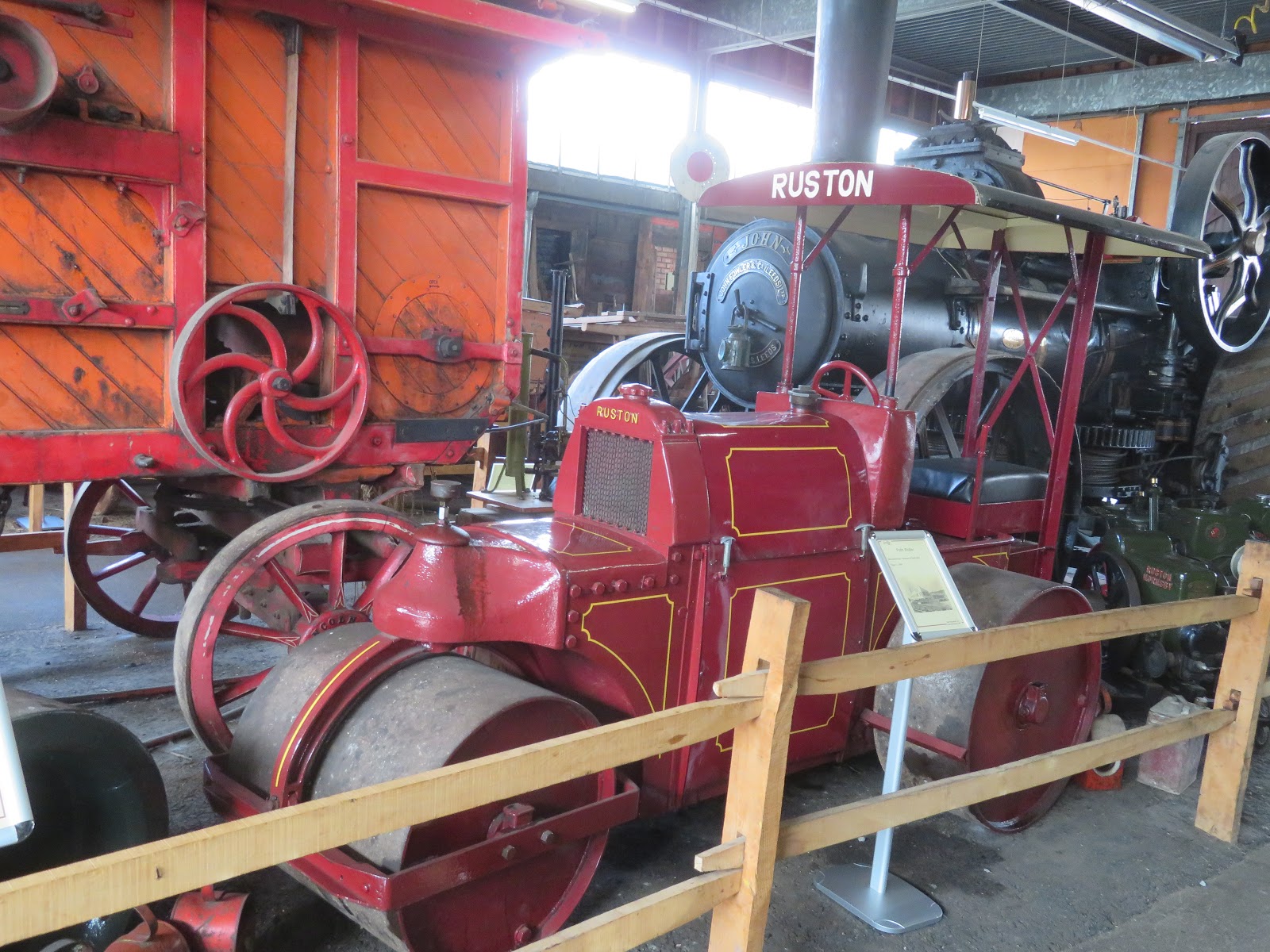
I distinctly remember road rollers like this when I was a kid. The modern ones do not seem to have the mystic of these old machines.
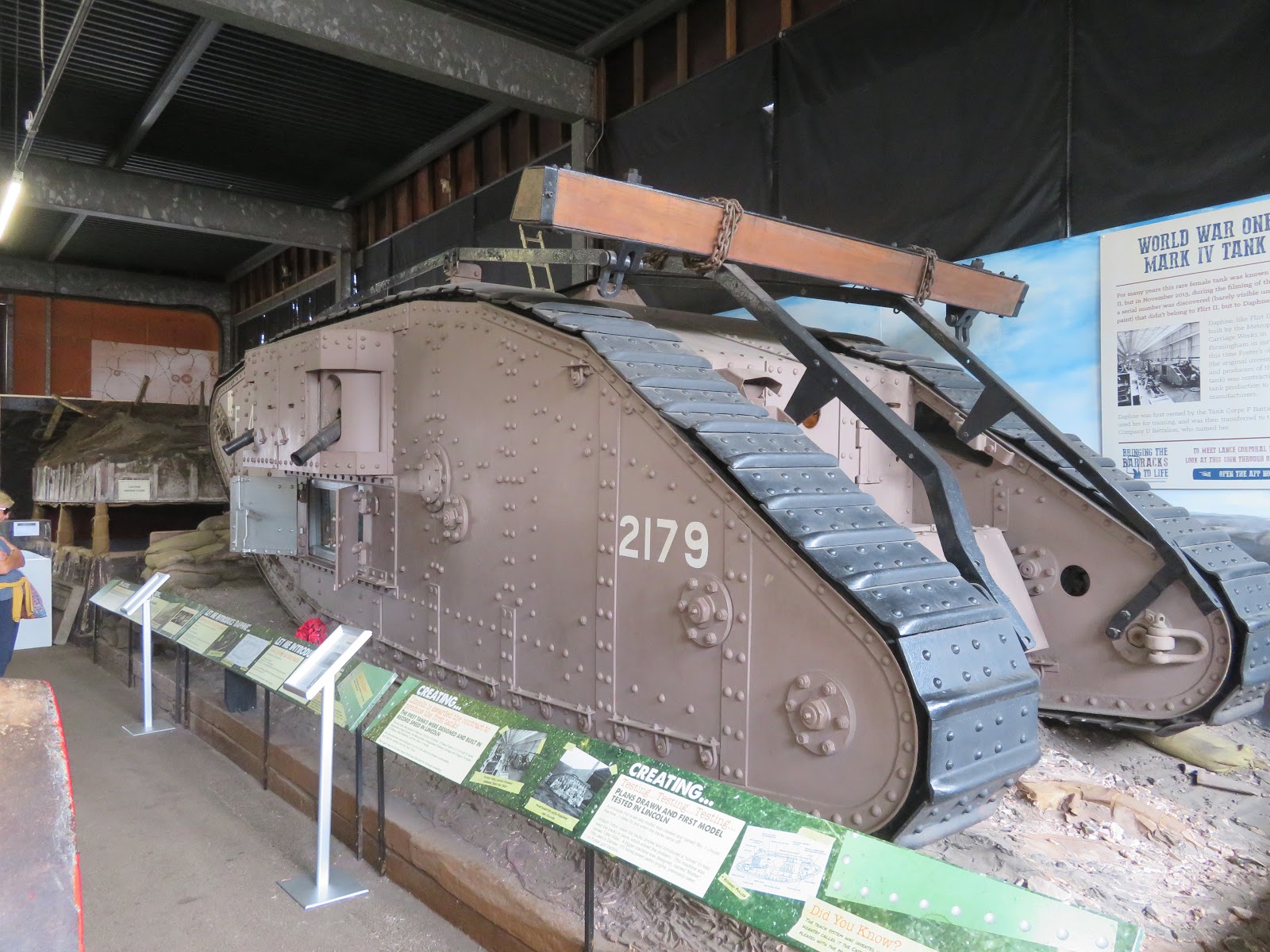
Because of their expertise in building machinery the War Office turned to them when they created their Land Ship Commission to come up with a design for new equipment. It became the tank, as above. The name tank apparently originated from when the prototypes were being constructed and they were still secret. The workers in the factory were told they were constructing water tanks for Mesopotamia, and the name stuck!

The museum is housed in the old barracks, armoury and stores that were built in 1857. They were decommissioned in 1960.

This photo gives you a good idea how high the castle and cathedral are above the neighbouring countryside. The Brayford Pool is just below.

We had worked up a thirst so sort out another of the pubs in the upper area of Lincoln and came to the Victoria on Union Road. It is right by the west entrance to the castle. It seems to have been here since at least the 1840's and looking at an old map it seems to have been called the Cross Keys in 1887. It has an arch to the front so would have had stabling around the back. It is a good old fashioned pub with two rooms and chatty staff and customers. It is a Batemans pub but has at least half a dozen different beers on hand pull.

I tried a pint from York Brewery. It turns out that they have had a bit of a chequered history. Set up in 1996 they were in the heart of York, near Micklegate. Their 20bbl plant was in old buildings with a new addition to the front. Part of the building was 16th Century and they can claim that Joseph Hansom was born there and he was apprenticed to his grand father who had is joinery business in what were the stables. Joseph was the 'inventor' of the Hanson Cab! It later became a provisions merchants until 1897 and then a furniture place until the brewery was set up. In 2008 the brewery was bought by Mitchell's of Lancaster. They were a family run pub business who had been brewers too until 1999. Things didn't go well for them and come 2018 they went bust and the brewery closed. In steps Black Sheep Brewery to buy them and their four pubs remaining. The run of misfortune continued as in 2019 the landlord of the brewery decided to alter the terms and increase the rent substantially, including repair terms too. This made it untenable for the new concern so they left in June. The beer is now being brewed at the Black Sheep Brewery in Masham until they find new premises in York,

I tried their Guzzler that is a 3.6% session ale. It has a nice colour and thin white head and smells of hops and the normal citrus fruit aromas. It has Challenger and Slovenian grown Celfia hops and pale, crystal malts. As a a session ale it falls between two stools for me. It hasn't go the full on mouthful of flavour of a heavily hopped beer, nor does it have the depth of a malty beer. Drinkable enough but I like a bit more depth myself.