Total Pageviews

Tuesday, 2 February 2021

Birmingham, buildings, bridges and basins.

 We were soon underway after a couple of boats passed heading to pass down the locks.

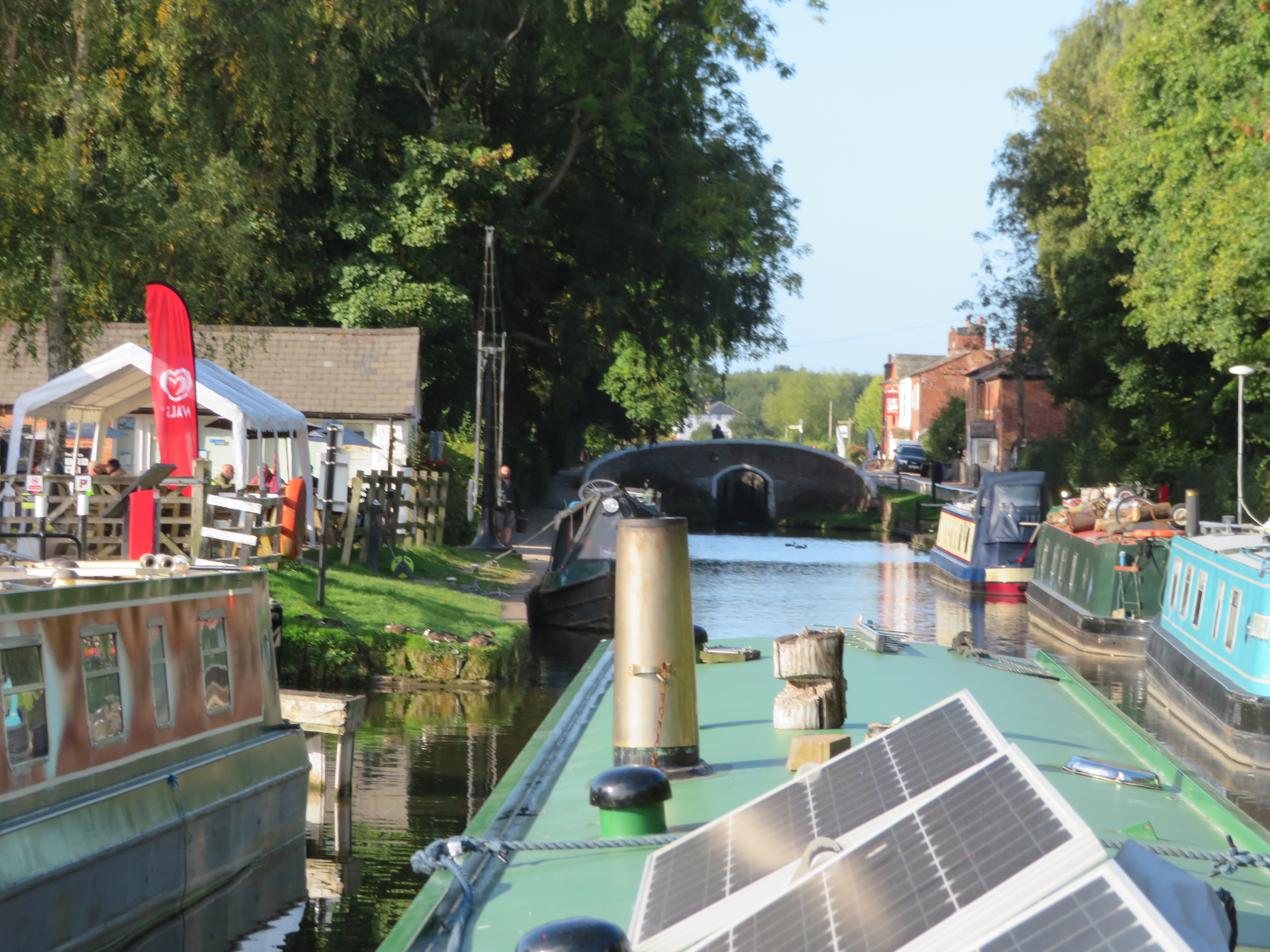
We were soon at the 'tunnel'. You can just see through the tunnel to the next bridge with the visitor moorings on the right. Just through the bridge, on the opposite side to to the tow path was Morris's Wharf. In October 1889 he was taken to court by the local sanitary board as he had two boat loads of manure and ashes on his wharf after having being told to clear it. This is the night soil that was collected from outdoor privys and highly prized as fertiliser for the fields. It was brought out from Birmingham and district in the boats and at the various wharves transferred to carts to spread on the field. Apparently it had been going on at Morris' wharf for over 33 years. However the the Sanitary inspector wanted it shut down and there had been complaints from the three cottages and bakery within 50 yds of the wharf. After a long hearing the Justices decided that the wharf should no longer be used for night soil and this cargo should not be handled near to houses. They could use Lord Norton's Wharf, Dunton Wharf, or Tatton's Wharf ( who funnily enough was one of the complainants) for night soil. I can see no sign of this wharf on a contemporary map. It is said to be over 100 yards away. The next wharf I can see is at Cuttle Bridge which is 1000yds. When I was a Humber pilot they were bringing liquid effluent from the sewage farm near leads to Goole where it was pumped into a little tanker, the 'Reedness' that then went out to sea at the mouth of the Humber and dumped it!

A little further on is this odd winding hole. I have always suspected that it was an old arm as it was on the tow path side of the cut.

This was the basin for the Minworth Sewage Farm. You can see it originally had a bridge over the arm. 
You can see it had an extensive wharf on the canal too. The system of sewage disposal was becoming overloaded by the 1880's as Birmingham and District expanded. Land was bought here in around 1877. Before that close by had been a point where water was extracted and pumped to Birmingham. A new method of treatment came in around this time and in 1898 they started building filter beds. By 1903 the first ones were in use and such was their success that the old method of spreading the night soil was stopped altogether. The basin was built about this time. You can see from this 1923 OS map that it was a very extensive site with miles of tramways around the site. What you can't see is that the tramway bottom right crosses the road to a huge area of filter beds etc with the tramway serving around the site. The canal was used to bring building material and the ash from local power stations for use in the filter beds.

After Minworth the road is never far from the canal but the cut seems to maintain a disdain for it as much as it can and wraps you in green, even if the water hides plenty of dangers for the propeller, going astern in particular.

Having discovered that canal companies employed their own police force I have discovered that not only were they employed to prevent theft etc, but to save the precious water resources of the company. In 1886 Constable George Humphris took a boatman to court for drawing the paddles before the gate was closed and for allowing his craft to strike the gates causing damage. He had been taken to court previously. It was interesting to see that the lock keeper repaired the damage himself. The boatman was fined 40s and 5s costs. George Humpris was born in Oxforshire boat married a girl from Fenny Compton. In 1881 he was in the census as a police officer, by 1881 it was as a Canal Police constable. It must have paid okay as they had 9 kids. Mind you the eldest two were out working.  In 1924 there were a couple of more case heard, each for drawing the paddles before the gates were shut and so wasting water. Fines didn't seem to rise, but the costs certainly did. The cases in 1924 were brought by a traffic inspector rather than a constable. He was William Edward Harper and lived in Sutton Coldfield. He had worked as a clerk with the canals since leaving school. His elder brother did the same, but on the railways! Albert Fullwood of Wolverhampton was fined 10s. In 1911 he was the Master of the Shropshire Union Co. narrow boat 'Westminster' that was at Audlem. He had his wife Mary and two children Annie and Albert, 8 and 5. On the form it stated they went to school (occasionally). He signed the form with a cross.

Could fining lock users for the improper use of the locks and damage to them be a new funding stream for C&RT. I was told that despite partially collapsing Meadow Lane Lock in Nottingham last year and closing the canal for a week or two the culprit was not penalised in anyway. I wonder if he was insured either.


On the left side was a tube works and on the right hand side was a mangle works. Sometime in the 1970's it seems they joined up and the canal was built over to provide more space and to link the two. Although there are no the rumbles of industry coming from above, I do like the light and the way the water ripples through this part of the canal.

The area where the motorway is now built was once another of Birmingham's sewage farms as large almost as at Minworth. On the other side of the M6 motorway was Fort Dunlop. the Dunlop Rubber Co was set up in Birmingham in 1901 to make cycle and then motorbike tyres. It was well placed when the demand for rubber tyres on road vehicles increased during WWI and Fort Dunlop was started in 1916. It opened in 1917 and eventually covered 120 hectares. By 1919 it had developed so quickly with around 3000 workers and running three shifts every day their own fleet of buses could not manage to convey all workers to the site from Birmingham. They started a canal passenger service from the bottom of Aston Locks to the factory. They had one boat with a 10HP motor that could carry 100 passengers and was able to be covered in bad weather. The cost of fitting out a boat and running it was comparable with running a motor bus, and in any case there were no new buses to be had just after the war. The experiment went so well that they were looking to add three more boats to the fleet. I wonder how long the service lasted?

We usually break our jorney up to Birmingham at Saltley and Aston University, but this time we were doing it in one and decided to use Aston Locks for a change. After passing Cukoo Wharf, or Lichfield Wharf as it used to be known as, and under Cuckoo Bridge the first lock is in sight. It must have been a very busy place with all the factories running on coal and parts made in one place being moved to another to be finished and for fabrication.

The two towpath bridges that you can see lead to the two basin on the 1886 OS Map. On the upper basin is the Aston Coach Works where they had a timber yard as well as the iron works. The Plume Works had a bvig fire in 1870 and the opportunity was taken to add to the brass foundry that was there. Strangely they started up a match and cartridge company on the site as well. There were bankruptcies but by the time of the map it was being run by the Peerless Seamles tube company that were making bike frames as there was a huge surge in their production. It later became the site of the Verity Co. who manufactured electric motors, fans and fittings until the end of the 1950's.

The BCN houses No. 70 are painted a nice blue at the second lock up the Aston flight, A little way on you can see another tow path bridge. This was the basin serving the Aston Paper Mill that used waste paper to make new. It was going from at least the early 1870's and I believe it was still going in 2012 and still recycling paper. I had better stop looking at every side arm off the canal as there are so many of them it would be a book, not a blog.

The works in its heyday. I think the open ended long shed at the far end of the works, to the left of the chimney covers the basin.

It isn't the Caen Hill flight but working up these narrow locks is in the sun and a pleasure. In the past down the left hand side were a cycle fitting works, Armstrong's Umbrella Factory, Albion Sawmills, Phosphor bronze foundry and up the right hand side was the gas works, mitre wire and rivet works, a granary and just behind the trees to the right a school. All life was here.

From the top of the Aston flight it is straight on to the Farmer's Bridge Flight. The canals are much more clear of rubbish than they used to be since the plastic bag ban, and people being more careful with bottles and cans. At Least on the surface. These locks are always a pleasure to work. Always people about and open and close easily. Helen is in Lock 6. Below that is a towpath bridge over what was obviously an arm of the canal. I thought it would just be into a factory but it goes along way and is called Whitmore's Arm It used to extend to an area of sand pits near New Hall. The sand was used for building but also for moulds for casting. Whitmore also had a foundry
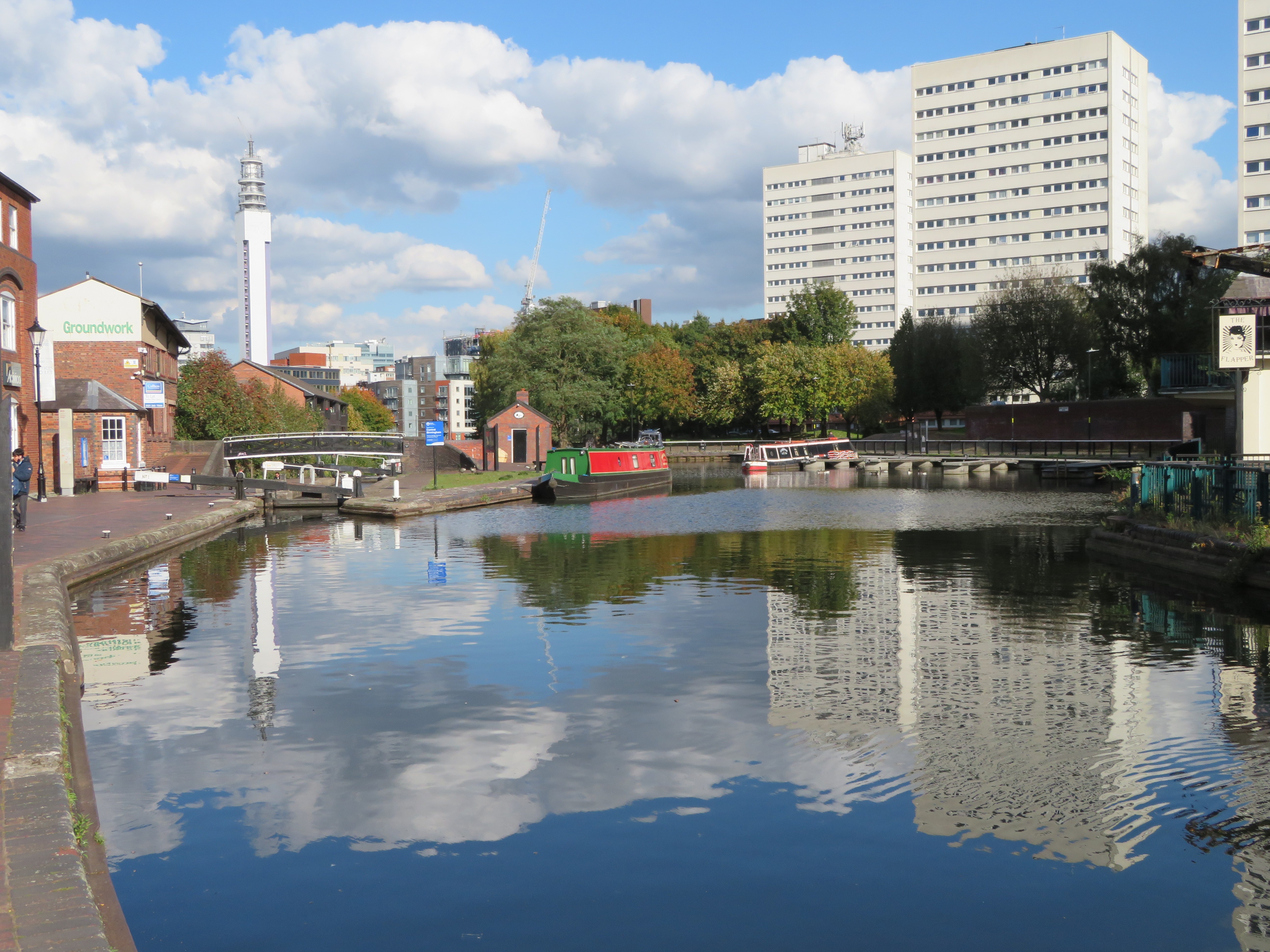
We got to the top of the locks and there was out berth right next to the lock at Cambrian Wharf. The actual Cambrian Wharf is where the pub is now, on the extreme right along where the flats are now was a large wharf called Crescent Wharf. Behind where we are moored there was another canal, the Newhall Branch Canal that also had another arm of it that led via a lock up to wharves, one called Gibso's Arm, that was found under What is now the east end of Centenary Square. When I was a kid my Dad worked near Bingley Hall, where the theatre is now and we weren't allowed to come down by the canals as they were all dark and sinister. Not now though. We love Brum.


Wednesday, 27 January 2021

Which Wharf's and what beer.

 We had chips for tea from the shop in the village for a change and a good kip before heading off up the Birmingham and Fazeley Canal the next day.

The Junction House has been saved and revitalised over the last couple of years and gives the junction a bit of class.

Before we leave Fazeley behind a little about the wharf. The canal was completed in 1789 but in 1795 there were big floods that caused a lot of damage to the infrastructure such as the bridges at Fazeley, Hopwas and the Thame aqueduct just outside Fazeley. I think the wharf was established from the opening of the canal and as can be seen was of a good size.

Fazeley Wharf from the OS map of 1921. You can see the length of it by the number of mooring posts. I'm not sure the crane there at the moment is the same one.

It seems that until around 1841 the wharf was run by Thomas Bache and Co who were major canal carriers of their day. They started in Manchester, I think in the 1790's. They seemed to cover the then system running fly boats from  Liverpool and Manchester Coventry and London with many wharves along the routes. I read that in 1827 they had 25 boats working. By 1838 they were also using shipping by sea to move freight so a fully integrated transport system. In 1839 it was two boatmen employed by Cache and Co that gave evidence against the murderers of Christine Collins at the Rugeley. By that year they were running fly boats and using the railways system. They claimed that the canal charges were the lowest there was. In December that year there were changes as the partnership of the business between Thomas Bache, Thomas Morris and John Herbert was dissolved and Bache was out. The new company was styled Morris Herbert and Co. By May 1841 the new company gave notice that they were discontinuing the canal carrying business and it seems that by then they were based in Coventry.

The footbridge and swing bridge are a well photographed feature of the start of the canal. We had stopped at the Fazeley Marina to get some coal to guard against evening cold. It was interesting to see that the marina was built in what was a reservoir to supply a mill. It must have been constructed to provide a supply when the canal was built and cut off the supply.

Drayton Brick Bridge seems miles away from anywhere, and a little further on the Kingsbury Water Park that is made up of old gravel pits mean that there are plenty of walkers and bird watchers. There is a nice walk on the west side to Middleton Hall

The Birmingham Canal Cottages at the first of the Curdworth Locks give it a lovely setting complete with a little swing bridge above the lock.

Helen brings her in under Cheatle's Farm Bridge and into the third lock of the flight.

Just above the lock is the Dog and Doublet pub and a convenient spot to stop halfway up the flight.

The Dog and Doublet pub is an old establishment, often called the Dog and Jacket until around the 1930's It is said to have been built by the first landlord a bloke called Clarrson in 1786. By 1899 Reuben Henry Stevenson had taken over as landlord. He had been a small farmer at the next door Marston Farm. He had been born in Harleston Staffordshire, where his father had been a miller and he had learned the trade from him. Reuben was well thought of in the area and at the pub set up the Pig Club and the Sick and Dividend Clubs. These were all self help groups where everybody chipped in for mutual benefit and also held the meetings at the pub. He also sat on the Tamworth Board of Guardians, Tamworth Sanitary Authority, Tamworth Rural district Council and was on the Kingsbury School Board
Frederick Smith Ltd., brewers bought the pub in 1899.

This is the trade mark of the Fred Smith Brewery. His father had been a cooper and brewer and when he died Fred worked for who the brewery was sold to for a couple of years before setting up on his own in Lichfield Road, Aston, in 1880. The business expanded and he built a new brewery calling it the Model Brewery. The business continued to do well. Fred was knighted by King George V for services to the community in Aston and Birmingham. The business was sold to William Butlers brewers.

F. Smith Ltd also owned the beerhouse in the village called the Beehive that had been licenced in 1869. The brewery's plan was to move Reuben to the Beehive, knock down the Dog and Doublet and build a new pub nearby. The licencing authority was not keen. First they were trying to reduce the number of outlets but they realised that the the new pub would be even bigger than the two others put together. It took several years for a deal to be done. In then end it seems that the Dog and doublet was extended and the Beehive survived until into the 1930's. Reuben Stevenson was remained until 1914 when the licence was transferred. Reuben died in 1923 aged 72 following an accident when his horse slipped when returning back from Tamworth and he and his wife were thrown out of the trap. He died a few weeks later of complications. Another long term families at the pub was the Greatbatch's. (Greatbach) William and May took over the licence in 1920 and the family were still at the pub in 1963.

We didn't stop though, continuing up the flight to the top. Just before the top lock, that is new having to be moved for the construction of the M42 link road is this tow path bridge. This is the site of Dunton Wharf and basin.

I assume a wharf was set up here when the canal opened but I'm not sure when the basin was dug. By 1834 the Daw End Lime Company was using the place. As this map extract from 1886 shows there were lime kilns on site. At this time the company was run by Thomas Cooper and George Strongitharm and they distributed lime from Walsall, Dunton, Bodymoor Heath, Catshill, Ogley, Essington and Rugeley. The limemaster added coal to their offerings but in 1846 the business was run by William Cooper and George Strongitharm with places at Minworth, Dunton and Bodymoor Heath. It looks like they left in 1871 and J.M. Dormor took it on, adding salt, bricks, tiles and drain pipes to the list sold. Later building supplies generally were also on offer. After that several different people made their living from the wharf and gadually reducing the products to just coal. In 1889 Lordon Norton owned the site

We carried on a little past the top lock to escape the traffic noise from the motorway. Once moored up, and with a dry evening and not too cold I set too polishing the port side of the boat. It took longer than anticipated as I was engaged in conversation by the passers by. I was also eaten alive by bugs and driven inside by the cold. The coal from Fazeley came in useful that night as we lit the fire to warm me up. This area will change if and when the HS2 gets built as it comes through this section.


Monday, 25 January 2021

Beware Flying cars.

 We set off in the sunshine the next day, although it was a bit cool first thing.

We were soon passing through Junction Lock with the help of a well wrapped up Volunteer Lockie and then turned left on to the Coventry Canal.

They must have done a bit of tree clearing as I don't remember such a good view of the hanger from Fradley air field before.

We were soon through Fradley Village and under the A38 Ryknild Street Roman Road and then the canal is lovely. We are particularly taken with the canal cottage by Brookhay Bridge, 88, just past the pumping station that you can see through the trees and next to the railway line and crossing. Looking on the old maps it looks like there was a little basin off the canal in front of the house. Whether this was a rural farm wharf, or for gravels etc or maybe even a transhipment place I don't know.

As we approached Huddlesford Junction these cows were enjoying a drink in the sun. Something the human population have been severely restricted in doing this year!

We were soon passing through Hopwas Woods not a boat stirred and hardly a walker to be seen either. It is magical with the sun filtering through the trees and some fantastic walks too.

We were soon at Peel Wharf at Fazeley. I wasn't surprised to find that the basin here is not old but was dug out when the wharf was sold for building in the 70's or 80's I should think. There was a wharf here with a crane but along the bank.. There used to be boats moored in there but no more it seems. It is such a shame that these facilities are lost and folk can benefit from the lift in house prices by being next to the water but not put anything in to the water ways economy. I'm not sure how you could do it though.

I thought I would write a bit about Streethay wharf as we have docked the boat there before and have always though they are particularly friendly and helpful, and there is a bit of a story to tell too.
It appears that Streethay Wharf was originally set up for general trading and a maltings that was on site fairly soon after. It was run for the City Brewery of Lichfield, whose brewery backed on to the old canal that went through the city. It started in 1874 but was sold to the Wolverhampton and Dudley Brewery after a big fire caused damage that couldn't be repaired whilst at war as the Ministry of Munitions was against it as they worried about spending resources on beer and also the need to keep production up rather than drunk workers! The fire was in October 1916 and the business was sold, along with 200 pubs, the following year. It seems that the maltings were retained and continued in production. By 1838 John Dean was working the wharf and selling coal and the Dean family seems to have stayed there for a while.
Just as an aside, John Wilkes of Streethay Farm close by the wharf also had a threshing machine and it is curious to note that he was taken to court by Henry Giles from Fradley (see my last post) for running a threshing engine too close to the public byway. The law said that it should be at least 25 yards away so as not to startle horses. In this case the horse was upset and was hurt and damage caused to gig and horse. The jury found it was sufficiently away from the road.

By the turn of the century Henry Griffiths was running a coal yard from the wharf and continued right up into the 1970's still owning it but it being run by K. Gibson from the mid 1960's. I think the maltings shut in the late 50's or early 60's and in 1968 Swam Line started hiring boats. It was called Swan Line as one of the directors was the Landlord of the Swam pub at Fradley. They had plans for a Marina and I suppose this is when the moorings were put in and the canal repair and chandler started.

The main story though is that on the stretch of canal between Bearshay Bridge and Streethay Wharf the canal runs close by the Exeter - Leeds Trunk road, the A38. This was the Ryknild Way Roman Road and in fact Streethay means the enclosure by the road. (the common Hay in these parts must be the enclosure). Over the last couple of years this leg has been quite overgrown and although straight it is difficult to find a spot for passing other boats. However in times gone past bushes and trees were not the only things you needed to avoid. This came about because after 1958 the old single carriageway road was made dual from Streethay to Branston just to the west of Burton on Trent. The improvements seemed to have an immediate effect as between 1964 and 1970 there were ten accidents with vehicles in, or partly in the canal, and six fatalities!

The first was in February 1964 when a car ended up in the canal. The driver escaped with cuts and bruises


The next incident was later that year in June. A young man was driving his mother in a MG Midget when it left the road and somersaulted through the hedge and landed in the canal upside down. It seems the mother was thrown clear. There men, and off duty police officer and two lorry drivers dashed to the scene and jumped into the water. They found the young man by the door of the car and stuck. by his arm. They managed to lift the car and free them feller and once on the bank gave artificial respiration until the emergency services arrived. He later died in hospital.

As you can see they were awarded a testimonial by the Royal Humane Society in the following year.

And so it continued with a van with 6 men in ended up in the canal in July 1964. In November 1965 the lads came back to work at Streethay Wharf on Monday morning and saw the wheels of a mini upturned in the canal. When it was recovered they found a man inside who had died of drowning! At the other end of the straight two lorries narrowly avoided ending up in the canal. 1967 a Mercedes rolled several times before ending up through the hedge and half in the canal. In early 1968 action had been taken and crash barriers had been erected. Almost immediately there was another serious crash into the newly erected barriers and in May another incident happened with serious injuries resulting.

In June 1969 a local man, the publican of the Anchor Inn at Streethay was killed in another van crash. This time the van had crashed into the central barrier and rebounded into the canal.

Despite the vehicle not looking as badly damaged as one may think the publican was thrown clear and was found later in the canal!

And that wasn't the end of it as in January 1970 two cars ended up in the canal and with all the occupants submerged. One of the cars contained a young man and his bride of only six days. Their car stayed upright but it took a while to free himself before going back and freeing his wife. Once she was on the bank he once again went in to try to rescue the occupants of the other car which was upside down. They managed to right the car and force a door but all three occupants were pronounced dead at the scene. There was some recriminations about the 50 or so onlookers some of which refused to give assistance, once saying he didn't want to ruin his suit! The man from the first car was assisted by another couple of blokes who immediately came to his aid, another started pushing men in deliberately to help lift the car!


After this it seems there were further road layout changes made and the vehicles in the cut seemed to stop. Originally it was thought that a dip in the curve was the cause of the cars getting into the canal. However it seems that the dual carriageway ended just at the spot so the cars were going at speed when the lanes reduced. Coincidentally with this there was a bit of a dog leg in the road that had been dead straight for a long way. The putting up of the crash barriers was trying to prevent vehicles getting in the canal but not the real root cause of the problem. It seems that after they continued the dual carriageway right the way to the A5 and taking the bend out has prevented the carnage that took place for six years, 10 accidents with 6 killed and many serious injuries.

I have no idea what you could do if you heard a collision on the road and it was heading for you. Hopefully the steel hull would protect you somewhat. However I will never pass down the lengths of canal that run alongside these main roads without having my senses on high alert.


Thursday, 21 January 2021

What about the workers?

After a quiet night the sun rose on another fine day and we were away at a normal time of around 09:30.

The moorings at Shobnall Fields Park are good, handy for town but with a nice open aspect and not next to the towpath. They were originally common land until the enclosures of 1773. They became Outwoods Pleasure Ground in 1883 and linked to Burton by the footbridge that was paid for by the feoffees of Burton. At the far end from the canal was a band stand and formal gardens with the area nearer to the canal much as it is today. It became the Shobnall Fields in 1960.

Outwoods Pleasure Grounds not long after it opened in 1883 it seems by the size of the trees.


The tow path bridge to the left now leads to Shobnall Marina but was the start of the bond end canal at one time that connected to the the River Trent. There was a 'bar' here at one time to protect the water of the Trent and Mersey Canal and to stop trade been syphoned away. The man handling of the cargo from the river barges to narrow boats must have been a pain.

Shobnall was also the haunt of Inspector Edward Campbell of the RSPCA there are many instances of him preventing cruelty to the animals on the cut and in the area. On 12th February he observed a donkey pulling a boat load of iron. Despite being exhausted the donkey was being beaten with a big stick to 'encourage' it,  by a young lad Alan Scattergood. His father on the boat was encouraging him in the task. The poor animal was marked all over its body from the blows.  Both defendants were from Stratton. The lad was charged 6d plus 9s 6d costs or 7 day in prison and the father was fined 20s with 19s 6d costs or a month's imprisonment. Another instance was of a horse also pulling a boat load of iron. The horse was obviously in a week and exhausted state an totally unfit for work. Joshua Street from Borrowash was fined 5s and 12s costs or one week in prison. He had since 'disposed' of the animal.
Inspector brown had been born in Scotland but spent several years doing the work of the RPSCA in Wigan before moving to Shobnall Road and carrying the his work all around the area. He was married to Agnes and they two children Maggie and William. Edewar'd health started to fail him and or asked for a move of area to better weather. In June 1886 he was transferred to Weymouth in Dorset. At the hearing of his final case in Derby and district the head of the court and the Mayor both wished him well and stated that all magistrates thought well of him. Others in his position had colpoured the cases involved to try to secure convictions but Campbell had never done this and been extremely fair in all his dealings. The Mayor added that he had conducted his cases with ability and feelings and hoped that the move to southern climes would improve his health.

A very picturesqe lock is found at Tatenhill with an old working boat moored top side too. There was a slight delay as we waited for this boat to travel up ahead of us. They stopped at the Barton Turn but as we waited for another one to travel up the lock we just had time to to top up with water.

As we waited I once again wondered what the large house at the fott of the lock was. I now find that it was a pub and malting called the three Horseshoes. It was obviously close to the main route Rykneld Way A38. I then found a great story about a theft that had been detected right there. In October 1846. The Master of the canal boat 'Messenger' Kay and three crew Greaves, Wilson and Pheasant were arrested. There were two boats mentioned so with that number of men I assume a butty was involved. The boats beloned to Brown and Potter of Nottingham. The 'inside' man was named Preston who worked for Charles Limer, maltster and publican. They were accused of stealing 6 bushels of malt worth 50s, part of a cargo that was from Nottingham to Manchester. It was stated that Joseph Oldham the police officer employed by the Trent and Mersey Canal Co. had his suspicions excited and followed the boats ans watched as part of the cargo was left at the maltings at Barton Turn. In another case Oldham's suspicions had again been excited when he followed a couple of boats carrying hogsheads, barrels and firkins of beer from Bass' Brewery in Burton to Manchester. He witnessed them seemingly supping beer when moored at Wood End Lock near Fradley. He and others followed them to another place further up the cut and when he thought they were drawing more beer from barrels charged aboard. The pail holding the beer was thrown into the canal but quickly rescued and evidence given in court. And in yet another case a wide beam boat trading between Gainsborough and Horninglow and owned by Smith and Sons of Horninglow had discharged a cargo of barley at Horninglow Wharf and loaded a back cargo when Oldham once again swooped. He found 8 bushels (400lbs) of barley hidden by the mast. There was oibviously a lot of this theft going on as at the court cases Joseph Oldham was described as indefatigable and testimonies given. 'The activity and tact displayed by Oldham in this case, and his increasing exertions on all occasions, deserve the highest praise and are doubtless suitable esteemed by his employers. He is indeed a terror to evil doers among boatmen'. And another states; ' Too much praise can not be given to Oldham for his numerous detections of these robberies which are not only of frequewnt, but almost daily occurrences..'.
I didn't know that the Trent and Mersey had their own police officers. Jospeh Oldham was born in 1808 at Wellesbourne near Lemington Spa and his wife, Sarah, nearby. It seems that by the start of the 1840's he was employed as a policeman for the canal Co. and moved to Findern in Derbyshire. He then moves to Kings Bromley Wharf by 1847 and remains there. By 1861 he is down as the wharfinger there and 1871 as a retired policeman living in the village at Riley Hill and in 1881 at age 71 he is a timber dealer. He had eight children so perhaps need to keep working!

After you travel alongside the very busy A38 you come to the nice little lock at Wychnor Bridges and the little warehouse next to the lock.. Looking on the old maps I can see that it has been here in some form since 1880. Just across the other side of the A38 is the Wychor Bridges Listed farm house that was built in the early 18th century. This could well have been linked with that large farm as there is very little else about, other than a mill a little bit further down on the river section.

Once down Wychnor Lock you are in the river section of the Trent again. Frequently closed due to high water levels and strong currents you soon pass under the cow bridge that is a little awkward on a bend with St. Agnes Church above you. Once through the bridge on the left the canal cut through the moat of the Old Wychnor Hall

This is the landing of the Alrewas lock ready to pen back up onto the canal section once again. Alrewas is  a popular place to moor and is often busy. It wasn't when we passed bet we were on a schedule so carried on.

We were heading to Fradley to meet up with friend Chris who was volunteering on the locks on the day we arrived. It was good to catch up all be it at a distance, but with a cake and coffee. The moorings filled up soon afterwards so we got there just in time too.

At Fradley Junction lived Henry Giles who was the surveyor for the area of the Trent and Mersey canal. He was born in 1808 at Bury in Lancashire and married Hannah Haile or Harle from Saddleworth in 1831. They lived at Bucklow Hill in Cheshire until around late 1830's. This isn't too far from the Bridgewater Canal, but I don't know if he was a canal surveyor then. By the time of the 1841 they were living at Horninglow Wharf in Burton as the surveyor. By 1851 they were established at the canal community by the junction at Fradley. Hannah and Henry went on to have eight children  6 boys and 2 girls. One of the girls Annie died aged 22 and the Forth son died aged 18 but already working for Severn Valley Railway at similar work to his father. The eldest son Nicholas aslo went down the surveyor civil engineer route and was short listed in 1862 for the position of General Surveyor and Collector for the Thames Navigation  Co at a salary of £200. A local man got the job. Nicholas was back home at Fradley Junction in 1871 when father and son describe themselves as civil engineers.

Three blokes that worked for the boating community and are little heard of. It is always the same but I have enjoyed finding out a little about them.


Friday, 15 January 2021

Bridges and Railways.

 After the unpleasant woman in Shardlow who incidentally lived on a boat called 'Tranquility' (shame it didn't rub off) we had a lovely night near Aston Lock .

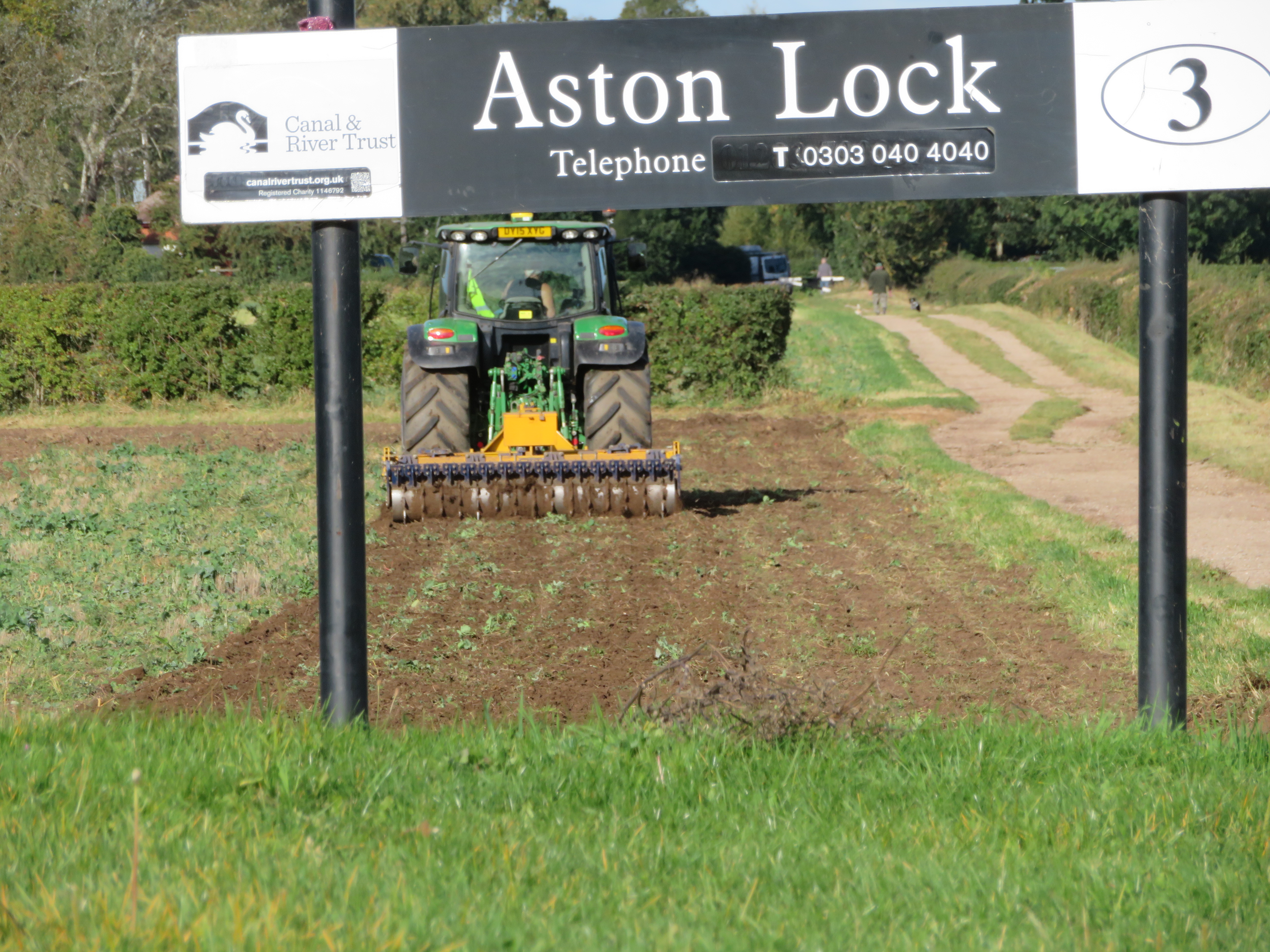
As we waited for Aston Lock I was reminded of the passing of the seasons with tractor busy in the field. There is definitely a different light after the height of summer and the colour starts to fade from the landscape.

As we passed Weston on Trent, the more southern one as there is another up towards Stone, there is a beautiful stretch of canal round Weston Cliff, but more of that at the end of this blog.

Swarkestone Stop is always handy for a top up of water and dropping the rubbish off. As we approached a man was walking away and much relieved he explained they had left their C&RT key in the water point and hadn't realised until they had got about three miles away. He was very pleased to see it still there as they were hirers and only had one. I expect that the warehouse, the nearer building is the one owned by the Soresby Co of Shardlow in the early 1800's. I wonder if the crane was there then too! Looking on the map it first appears in the 1920 edition.

We got to Stenson Lock and there was a slight delay as we waited for boat movements. There was a voluntary Lock keeper working. I have always wondered why the name of the pub and cafe is the Stenson Bubble. Apparently it is due to the noise the canal by-wash/overflow makes as it enters the canal below the lock. I can't recall ever hearing it bubble but it is a big lock and the flow can be vicious. I always put out a short head line to ensure that the boat doesn't get washed off the jetty and I can't hold it on just a centre line.

We were getting quite worried about fuel now so we were relieved when we turned into Mercia Marina. It was very windy but managed to get into the arm under the bridge okay, and then swung her round on to the fueling berth okay. There was a short delay as we waited for them to come and serve us but we had lunch to prepare. The fuel was a very good price, which surprised me for some reason, and we were allowed to stay on the wharf until we had finished our lunch.

As we approached the entrance to the marina folk were flagging us down, thinking that we were jumping the queue I think, and telling us that there was a tree down ahead. It was still across the cut when we came out again but some folk coming in the opposite direction were busy hacking away at it when C&RT arrived. As usual with little suitable equipment. However between them all they had it sufficiently cleared to pass in short order. Helen and I looked at each other and deiced to continue as were were on a bit of a schedule.

We were soon passing through Willington and I have always wondered why there is such a big gap between the Dragon pub and the canal. I now know why.

In this 1920 map you can see the canal running across the top with MP mile post in it. You can see the long warehouse that was built in the 18th century and the wharf managers house to the right of it. (Where the car park is now I think). A cattle pen shows one of the cargoes moved. WM stands for weighing machine/bridge and you can see where the pub still is by the PH public house.

A fire destroyed the warehouse in 1935 and it was pulled down the following year. The managers house survived until the 1960's.

The River Dove is not so full when we cross on Brindley's twelve arched aqueduct with the Medieval Monks bridge next to it. Just beyond is the much more mundane A38.

Just a pretty picture as we approach Burton on Trent. It was pretty dark as we penned up Dallow Lock and pitch black as we passed Shobnall Fields Park so it was just as well there was room for us to moor up. It was very dark and cold when we pulled the door shut behind us and enjoyed the warmth of the stove.

In previous visits to this area we had stooped at Weston on Trent and had a nice walk around and a pint at the pub. By Weston Cliff there is a footbridge and the River Trent comes close by to the south. Here there was a ford and later a ferry across. There is evidence of a ferry being here from the 11th and 12th Century and I can find newspaper references from 1846. In these later years it seemed to have been a rowing boat type affair that could carry around 20 people and occasionally horses. It was guided across the river by pulling on a rope across the width to prevent the boat getting washed down stream. By 1901 the ferry had been repaired but was difficult to use as the water levels were so low as the weir at Kings Mill had failed. Problems were found as to who was responsible for the ferry as a landing stage was required to take passengers out to the boat in deeper water but who was going to pay for this? A member of the local council suggested contacting the Landlord of the Cliff Inn. This was because the pub was a busy venue for trippers that either came by charabanc or train to Weston and wandered by the river and across to Melbourne. 

On this 1881 OS Map you can see the footbridge over the canal that leads up to the Old Cliff Inn. The path from the canal leads to a boat house and a foot bridge to arrive at the ferry point. On the far right between the canal and the river is a wharf where cargoes were transferred between the two, maybe to service the mills a a little down stream at Kings Mill

In 1890 there was a report that a Hannah Leak, a servant at the pub, was ferrying people across the river. Seemingly the Inn had taken on the ferry to promote business. In 1906 the ferry was in use as the Robin Hood Rifles Old Boys came on a trip to Weston Station, walked down and crossed on the ferry to Melbourne Hall and had a visit there then a meal at the Melbourne Hotel before heading back. By October 1908 the jetties had been washed away and the ferry was not in use and the local Wesleyan Ministers were complaining as it interfered with their ministry

By 1910 locals were raising the issue with local and district councils as the lack of a ferry meant a large detour and a loss of public right of way. In 1911 the signs pointing to the ferry were removed and this prompted more action, but still with no results. Whilst some wanted the ferry reinstating as an easier and cheaper option Councils really wanted a 10' wide bridge as it had to carry a bridle way. Funding, as always, was the sticking point. Meetings were held and petitions written up. However in the meantime a bridge had been erected privately.

The Sphere was an Illustrated weekly newspaper that ran from 1900 to 1964 and carried the story of the Trent College Officer Training Corp in February 1910 installing this suspension bridge over the Trent at Weston Cliff with no help from outside. It was still there in July 1912 but whether crossings were allowed by the general public I doubt. It was most likely just for a camp exercise and I'm not sure how long it lasted.

In 1922 and 1923 once again there was rumblings from some of the locals to get something done. They thought a ferry would be quick and easier to get going but much research could not confirm who was responsible for the ferry. It seems that hopes were pinned on the brewery, Offilers of Derby, who owned the Cliff Inn as the pub had been operating the ferry for a few decades. The Cliff Inn had been a manor house but with the coming of the canal it had become a boatman's watering hole. In the end it was felt that it would have to be carried out by a 'trust' and financed by public subscriptions It obviously never happened.

During the course of researching about the ferry I looked at the OS Map from 1944 and was shocked to see the changes in the area.
At the bottom of the map is an immense area of railway sidings! I wondered what sort of factory they would service that had just sprung up from nothing, but there are few buildings. It seems that they were for the war effort but what was it?

 It turns out that it was the Melbourne Military Line. The War Department took over the stretch of railway between Asby de la Zouch and Swarkestone for their own purposes. The 2nd Railway Training Centre was set up. Here, individuals at first, and then whole companies of men were trained how to destroy and then rebuild railway infrastructure and then maintain and run them. Canadians forces were also trained. There was a bridge building school at Kings Newton too. You can see a bridge across the River Trent on the map as it was necessary for troops to cross as the main accommodation camp was north of the river. It was another suspension bridge. You can see the Nissan huts on the map to the top of the map. Training for the railway engineers was in blocks of eight weeks and for construction engineers a further 8 weeks on the bridge building course. Over the course of the war more and more sidings were added, presumably for readiness of the D Day Landings. The depot had eight old steam locomotives on site and military stores were a common cargo as well as coal and lime from local places You can also see that the wharf seems to have moved a little nearer the footbridge over the canal. To the north of the camp and over another railway line there were two prisoner of war camps for Germany prisoners, so in this little quiet corner of Derbyshire the war was close at home.

 In 1st January 1945 the line was returned to the London Midland and Scottish Railway. There is very little to show it was ever there. They must have removed the bridge when they left too. In the field by the river is an old rusty boiler that is thought to have come from the old engine that powered the bridge building crane and there are some vertical piles still in the water. Very little remains of the sidings. After the war the camp was used by Ukrainian and Latvian refugees and the Cliff Hotel became the social club and youth hostel for them. As far as I know it is still used by members of the old Russian Baltic States.