Total Pageviews

Thursday, 15 August 2019

Lingering a little longer in Lincoln before leaving.


There has been an oil mill on this site since 1790, and before that it was the site of Lincoln's first 'modern' hospital. It first started in 1790 as the mill of John Summerscale. It was later sold to his son in law Doughty who further developed it until about 1891. The mill was closed in 1990 and the various parts have been converted to flats.

After the wind of yesterday the full offering of the 1940's weekend was able to get going today. I liked the old fashioned police man.

There was vehicles and equipment to be seen, and there were many folk out to walk around. There were plenty of stalls up at Steep Hill and Helen was able to add to her store of Christmas presents.

The West face of the cathedral is covered in scaffolding and sheets, but this frieze shows so newly repaired work and may well be the temptations of Hell.

We left about 1300 and headed up the Witham. Amy came for the ride.

These aluminium and steel figures span the river in City Square. They are called 'Empowerment' and were created by Stephen Broadbent and sponsored by Siemen's (Alstom Power at the time). It was erected in 2002.

In times of high river levels and flow the restricted width of the river through the Glory Hole, or Murder Hole as it used to be called, and the flow is really strong. There are traffic lights that warn you of the strong flows, or prevent passage.

Here you can see the barrel vaulting at the far end that is from the oldest, Norman, part of the bridge from 1160. The arched vaulting is from when it was widened in 1540. We dropped Amy off as we cleared the Witham and entered the Brayford Pool, and the Fossdyke Navigation. It seems that they have extended the official visitor moorings as we seem to remember that there was only room for a couple of boats previously. Once clear of the permanent moorings we were soon at the very lovely Burton Waters Marina for fuel. All was very efficient and 85p for the cheap rate.

Saxilby is always busy when we have passed by previously. There was room but we didn't want to stop today and passed through.

Just about the only bend on the Fossdyke is at Drisney Nook. This little place seems to have been the centre of a modern slavery ring last year!

It is amazing to see how little it has changed since the early 1900's. The Humber keel is a very rare sight now though. It is interesting to see that it is towing something behind as well as its dingy. They used to load to a draught for the Humber and Trent, but coming into the Fossdyke the depth was left so cargo was transferred to a 'lighter' and towed behind to its destination. How on earth did they prevent it colliding with everything that they passed with it on such a long line.

This was taken on Monday morning, but when we arrived on Sunday evening the Cottam Power station was off line. No smoke from the chimney and no steam from the cooling towers. Monday morning must need more power. There is a combined cycle gas turbine power station on the site too. It seems that both will be closed by September 2019.

Wednesday, 14 August 2019

Liking Lincoln.

It had rained heavily through the night, but by about 0900 it had brightened up and we set off towards Lincoln.

The bit of wind was behind us and the rain held off as we proceeded upriver.

 by Anwick 
This is another of the sculptures on the Water Rail route. It is called 'Lady of Shallot' forge and represents ears of barley, at 4.5 mts tall.

5 Mile bridge is named so because, funnily enough, is 5 miles from Lincoln. It was erected to replace a chain ferry that served the Fiskerton Station that was the 'wrong' side of the Witham. Fiskerton was so named as it was a place for fishermen before the tide was topped raising to this distance from the sea.

I'm not sure whether this is a work of art or just a few railway sleepers placed on end!

All Saints Church, at Greetwell, dates from the 11th Century. The village was in the Domesday Book and an abandoned Medieval village was nearby.

A bailey bridge had been built across the Witham as it seems that a new eastern bypass is being built. It is a major scheme and judging by the lat time I drove around Lincoln it is definitely needed.

Like at Ely the Cathedral stands out from a long way off. In Lincoln the hill is much higher than at Ely though. It still dominates the town.

Stamp End Lock was waiting for us. We had to turn it round, but the top gate is a guillotine and the bottom gate has the windlasses attached to the gear so you don't need to take one with you.

We topped up with water above the lock and decided to go and moor behind the other boat in the picture. There were rings and not under trees as we are expecting gales tonight. The footbridge joins both sides of the river.

Stamp End was the industrial area of the town with factories galore. It is funny how the industrial buildings of other years are quite posh these days, provided that they are converted I suppose.

Once we were moored up we decided to walk up and have a look at the Usher Gallery. It was set up with a local benefactor called Usher and displays some of his amazing collection.

The first picture we saw was by Fred Elwell, who was from Beverley and well known to us. It seems that this is one of the best we have seen though.

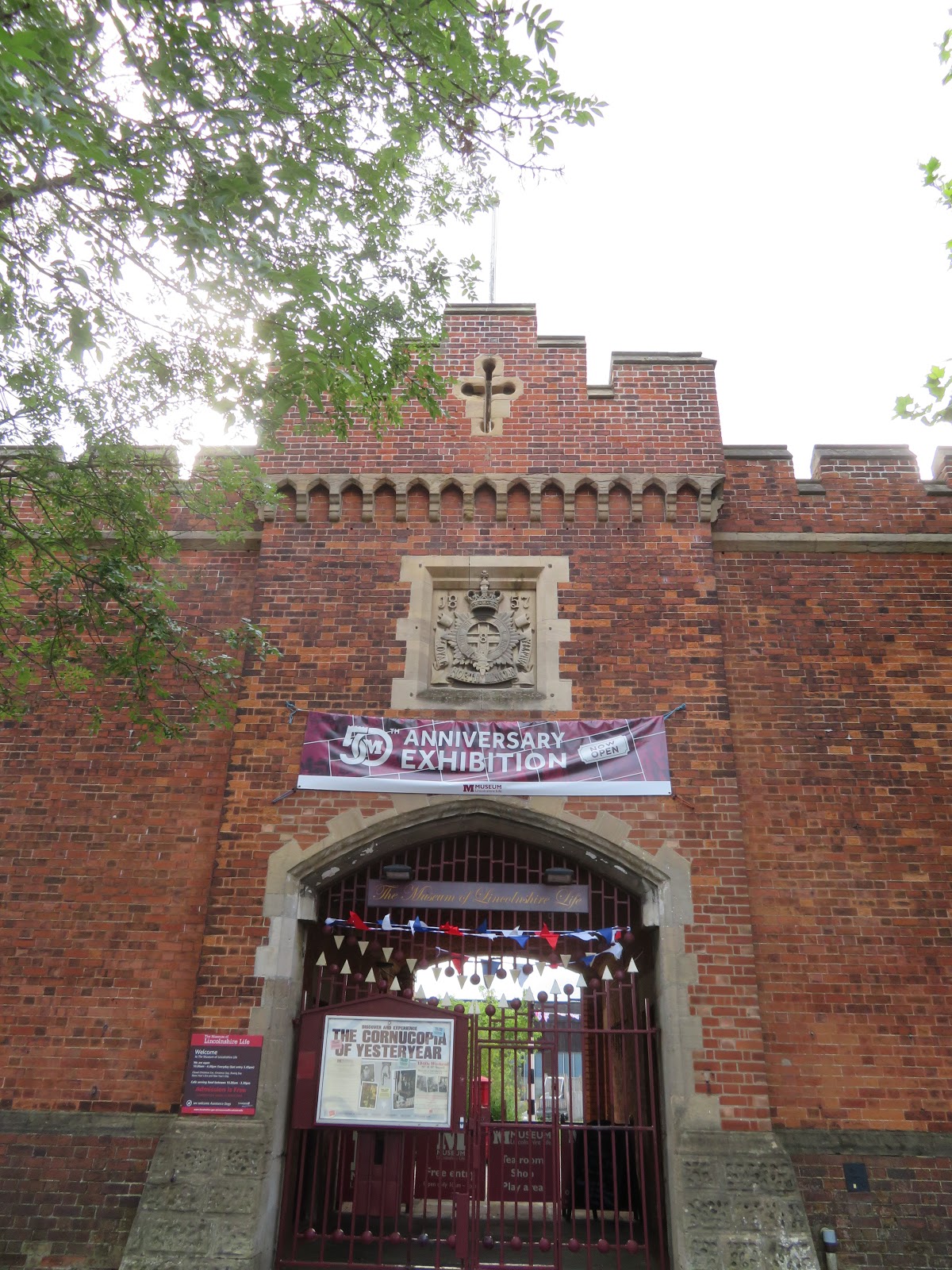
Afterwards we walked up to the Museum of Lincolnshire Life where there was a good display of agricultural equipment that was made in Lincolnshire.

Because of there skills with engineering when the Land Ship committee in WWI were looking to develop a machinery to break the deadlock in the trench warfare soon asked them to produce their prototypes and develop them further. Hence the tank was born. It seems the name tank came about as due to secrecy the company told its employees they were building machines for carrying water in Mesopotamia. They were called tanks, and it stuck. 

The museum of Lincolnshire Life was built in 1857 as a barracks, armoury and store until the 1960's. It was loads to see and is will pass a couple of hours, and all for free. For those of a certain age you will see plenty that you will recognise from your youth.

There are also plenty of good pubs in Lincoln and we wended our way back to the boat via several of them!

Tuesday, 13 August 2019

Sure is sweet.

A very quiet mooring and a good nights sleep was rewarded with the sun streaming in and the prospects of a nice day ahead.

On our way over the bridge to the King's Arms this photo gives you some idea of high we are and what the surrounding countryside looks like at Kirkstead.

We seemed to have the river to ourselves. One lady on a narrow boat pulled off the pontoon at Southrey almost in front of us, and that was it.

Stixwould Station opened on the Great Northern Railway in 1848 and this was the main north to south route with 5 trains a day. In 1850 the line from Peterborough to Doncaster via Grantham and Newark was completed and this line became a backwater. The signal box controlled the level crossing and a small goods yard. The station closed to freight in 1963 and passengers in 1970. The small ferry that crossed the river here, mainly for school kids and train passengers, also closed. It is a private house now.

There are ten art works on the Water Rail Way that follows the old railway line between Woodhall Spa and Lincoln. This one is a 5m tall piece of sweet chestnut that is representing a meandering river. On the side it has a quote from Tennyson, 'For men my come and men may go, but I go on for ever. It was made by Nigel Sardeson.

The Lincolnshire Beet Sugar Co Ltd opened in 1927 and at the end of its first year made a profit of nearly £134,000! By 1934 2000 tons of beet were processed every day, 250,000 in the year. £1 million was paid out to growers. They produced 750,000 sacks of sugar and pulp and had over 500 employees. In 1950 the last cargo of beets was brought by barge, and in 2001 the factory closed.

Today's photo shows there are still some of the original buildings left, although I'm not sure why it is still standing. Much of the machinery has been sold to other UK factories and even abroad. The biggest building in the old photo seems to be the one behind the tall light column and the brick building to the right seems to me to be the rear most of the buildings in the old photo. Of course the chimney has gone replaced by a steel one.


The road bridge near the sugar beet factory was only erected about 1894 and replaced the ferry that had been there since 1714. It has been given a bit of assistance today as it has been strengthened with some concrete supports.

A little further up river you come to the railway bridge where the line crosses from the north to the south bank. Under the foot bridge is the South Delph and when Stamp End Lock in Lincoln was being built in 1808 this provided an alternative route to maintain the navigation. The original railway bridge was a timber one until replaced with this is 1860.

As the River Witham passes under the railway the Old River Witham continued straight on. The improvements that included the building of Bardney and Stamp End Locks also meant an artificial cut was made to straighten and deepen the navigation and the old Witham was disused. It still goes up to a pub and caravan site.

The lock was part of the river improvements of 1812 here at Horsely Deeps. A few years later the navvies working on the river improvements rioted over the cost of bread and and other basic needs.

The Bardney Lock was overseen by a Mrs. Wright for 34 years as she lived in the lock house. It is now a holiday let. The steps on the other side of the lock mark the site of a swing bridge that gave access to the north bank island between the Witham and North Delph drain. It was still there in 2006, but not sure when it was removed. We stopped for water and to dump the rubbish.

A little bit further on is the pontoon at Fiskerton Fen. We were pleased to see it empty as this is such a peaceful spot.

There is access to Fiskerton Fen Nature Reserve. It was created after the field had been used to dig out clay for the carrying out of flood defence works to the embankments between 2002 and 2004. Afterwards it was allowed to flood with rain and it was made into a wet land habitat and reeds planted. The hide is constructed with a nod to Bronze Age man. An axe head was found here.

There was very little to see in mid afternoon but you can just make out the pontoon on the river in the top left. We have seen barn owls hunting on the bank here, so lets hope they are out again tonight.

Monday, 12 August 2019

A wander up to Woodhall.

It wasn't to late when we got underway after getting more sleep than I had expected after hearing that the Tornado's were having a night flying period!

The new road bridge means that there is no traffic on the old 18th century bridge after it was erected in 1992. It was quite a windy day and with a cool edge to it when you re on the water.

This is Billinghay Skirth and is navigable by narrow boats for about half the distance to the village of Billinghay and 60' boats can turn there. There appears to be so much weed it seems daunting. Mind you if you want to escape wide beams these navigable drains are your chance as the doors have stops on them to prevent them opening any wider than would allow entrance of a narrow boat.

There were several areas on the bank with these signs. This one had a willow growing in the water but others just on an exposed bank. There seems to be plenty of fish in the river too. Helen lost her cap in the gusty wind around here but we were able to reverse up and pick it up before it got too close to the bank for us to access.

This is where the Horncastle Canal branched off the River as Witham. This was first cut as a canal to Tattershall a private initiative by a John Gibson in 1786. In the 1790's Sir Joseph Banks, of Captian Cook's voyage fame, from a local family leased the manor of Horncastle and set about improvements. Jessop was asked to survey a route and suggested using the River Bain and entering the River Witham at Dog Dyke, not using Gibson's cut. The 11 mile canal had twelve locks. The first on Gibson's cut was a bit inland, and that on the Dog Dyke route was at Tattershall. It was started in 1795 and was opened as lengths were dug. It was 1805 before the full length was opened.It was the coming of the railway that did for it and it was officially abandoned in 1889 but sand and gravel was carried to Kirkby and coal to Coningsby until 1910.

The river remains wide and the weed is only found near the banks on the whole. The banks are high, preventing much of a view but the big skies and wide river mean that it never seems oppressive, well at least in the sun.

When we approached Kirkstead Bridge it looked  like the pontoon was full but there was room on the end and we moored up so as to walk up to Woodhall Spa.

The main habitation here abouts was Kirkstead, before Woodhall was developed. There was a wharf here, and Kirkstead Abbey was established nearby in 1139. There was a lock on the Witham about a mile south from the improvements of 1762 but was removed in 1812. In 1848 this station was built by the Great Northern Railway on their original main line from London to the North, and called Kirkstead. It wasn't until 1922 when the name was changed to Woodhall Junction to try and promote the new town and spa. There was another halt in the new town called Woodhall Spa. Passenger traffic finished at the halt in 1955 and at the Junction in 1970, and freight in 1971.

The Tea House in the Woods was there to serve the folk using the Spa Baths next door. The two ladies who managed it were sisters of the superintendent. It opened in 1903 and everything was very 'classy'. They also sold fancy goods and souvenirs and ran a lending library too. It had a wooden veranda until the 1980's when the current set up was built. After 2000 the original tea house concept was lost with it becoming an Italian restaurant, but resorted back to what you see today in 2014. It was very busy indeed, so it seems to be working out.

The Kinema in the Woods started out as a pavilion to the Victoria Hotel in the late 1800's and overlooked tennis and croquet lawns. The hotel burned down in 1920 and the pavilion was sold off. It became a cinema in 1922 and has remained so to this day. It is the only full time cinema that uses back projection and this was required due to the low roof trusses. In 1987 a Compton organ was installed and this is still played. There are two screens, in screen one from the beginning the front rows were deck chairs and were very popular as they were retained until 1953. During WWII they were reserved for officers.

During a search for a site to sink a coal mine resulted in them being flooded and after the water was analysed it turned out to be full of iodine and bromide and other minerals and the Victoria Hotel was built along with the spa baths which are these buildings. The spa closed in 1983 when the well collapsed and it was later vandalised and burned. There is planning to convert it to a health club with shops and accommodation.

The Cottage Museum was built as a flat pack in 1887 from Boulton and Paul. Harrods also sold such buildings. There are not many cottages like this left. It was erected for the Wield family who operated bath chairs and donkey carts to move the invalids around the town. They also took photos and collected things for 50 years whilst living there. In 1987 it opened as a museum showing this collection off.

In August 1943 a German parachute bom landed on past of the Royal Hydo Hotel and flattened most of it. The site was passed to the town and the Dambusters Memorial was erected here. It is in the shape of the dam with the centre being breached and slate representing the water cascading down which also has the names of all those lost from 617 Squadron in the War. There are other memorials in the green area too.

We managed to arrange to meet up with a friend who lives in Lincoln and went for a meal at the King's Arms on the other side of the Kirkstead Bridge. I can recommend the meals as they well very well cooked and not expensive.